

AUTOMATED TRADING

17 April 2013
NIFTY CHART PATTERN UPDATE FOR 18 APRIL
RETRACEMENT LEVEL 38.2% OF PREVIOUS UP MOVE IS COMING AT 5644 AND 20 DAY MOVING AVERAGE IS NOW AT 5631 IF HOLD THEN ANOTHER SHARP UP MOVE TILL 61.8% RETRACEMENT LEVEL (5868) AS SHOWN IN THE CHART MAY KISS VERY SOON.

KEEP STOPLOSS OF 5610 WHICH WAS THE PREVIOUS RESISTANCE LEVEL AND BE IN POSITIVE DIRECTION.
CLICK ON CHART BELOW FOR ITS LARGER VIEW.


5 Effective Rules For Trading Success Regardless Of What You Trade
There are some basic
principles and rules that will make you as successful traders trading either
you are stock traders, option traders, future traders, and even Forex traders.
It doesn't matter what you trade, but it’s matter how you trade that makes you
successful or not !

Rule 1: Follow Strict Trading
Plan.
The biggest enemy to
your trading success is not the market. It’s YOU. And you are the biggest enemy
because of your emotion. This is the first rules that why traders fail. It is human nature to want to
vary or break rules and it takes discipline to continue to act in accordance with the established rules. Made simple but
effective trading plan and stick on that. Don’t change on every trade.
Rule 2: Be perfect on One
Strategy At A Time.
Never jump from one
trading style to another. Be perfect on one style and strategy first rather
than becoming average at several. Focus and work hard to completely understand
every angle, abnormality, risk, and then move on to Iron condors..
Don’t be a jack of
all trades master on none. Try to become master on one simple rule.
Rule 3: Become a chartist. Chart
tells everything (My Favourite).
Stop hoping and
wishing already ! Chart tells everything.
Try to read its pattern not your hope. Everything reflect in the price and
pattern when it comes to technical analysis – this is why I favor it over any
other system. Master the charts and let them guide you.
Rule 4: Stop The “Analysis
Paralysis”
Most people just analyse
–analyse and analyse but never get in! To much analysis may confuse you. How are you ever
going to learn? Start small but keep
trading. Find simplest pattern which is easily readable. Don’t enter in
complicated pattern which you can’t read easily. Money can made only in
simplest chart pattern.
Rule 5: Find when to trade.
We all trade for 2
simple reasons: Money and Freedom. In order to succeed listen always the
system. A traders should governed by his or her system, not by the
circumstances of the moment, the market, or the outcome of few trades. You don’t
know what is successful or what fails if you constantly change your reasons for
trading. Get a coach, or join a trading community to keep you accountable.
If you can integrate these insights into your own psychological mind
set, you’ll gain a significant edge in the market. I can’t stress this enough:
the right mind set is one of the keys to investment success, and most traders
fail to understand this.
Nifty Eyes Multi Level Money Making
Club aim is to provide all traders complete and advance technical analysis
knowledge and work together to trade in Indian stock Market and commodities
Market. This is for complete beginners to pro traders who will develop the skills how to trade and
invest through our online trainings, meetings and lessons....
There are many ways to approach the
markets and having the discipline to follow a solid trading plan is critical to
success. Here at the club we will constantly work together with members to
develop trading strategies; a key element to profitable trading being
pro-active money management.
JOIN NIFTY EYES MULTILEVEL MONEY
MAKING CLUB
PROFITING FOE EVERYONE
written by :- Rajesh kumar singh
16 April 2013
The 14 Stages Of Trading Psychology…
The chart below is a visual representation of the 14 stages that I’ll cover below. This would be a great visual to print out and put in your office or desk to remind you to ask yourself: “Where am I right now?”
ANGRY BULL


ANOTHER THREE WEEK IS IN FAVOR OF BULLS AND 5860 IS ON CARD. WEAKNESS WILL BE ONLY BELOW 5620 NOW. A MINOR CHANNEL RESISTANCE IS AROUND 5760. CLOSE AND SUSTAINING ABOVE 5760 NEXT TARGET IS 5860. THIS COULD BE TERMINATION OF RALLY BECAUSE I CONSIDER THIS RALLY AS A CORRECTIVE BOUNCE OF B WAVE OF C. WE WILL REVIEW AT THAT TIME.
ACCORDING TO OPTION OPEN INTEREST 24 LAKH FRESH SHARES ADDED IN 5700 PUT INDICATING THAT 5700 PUT IS BEING WRITING IN RISING TREND AND IT IS EXPECTED THAT TOMORROW NIFTY MAY GIVE CLOSING ABOVE 5700. AFTER A SHARP JUMP OF 130 POINTS IT MAY SPEND SOME TIME IN CONSOLIDATION. AFTER THAT WE MAY SEE ANOTHER BIG JUMP UP TO 5860 IN NEXT 10 TRADING SESSION. 5900 CALL OI ADDED 9 LAKH FRESH OPEN INTEREST. IS MARKET IS PREPARING THIS LEVEL BEFORE THIS EXPIRY. LETS SEE WHAT HAPPEN.
Trade Hard or Trade Smart
Three things are very important in market. 1. Direction 2. Better entry and 3. Better exit.
Made your trading simple but profitable. Join Multilevel money making club and learn simple trading system.
The only place where people made only profits.
Good luck.
NIFTY BLAST

I GAVE YOU ROAD MAP YESTERDAY UP TO 5696. NIFTY REACHED THIS LEVEL IN A SINGLE JUMP MADE HIGH OF 5699.
CHEERS!!!!!!!!
15 April 2013
BANK OF BARODA


CLICK ON CHART ABOVE FOR ITS LARGER VIEW
TECHNICAL BREAKOUT SEEN ALONG WITH 20 DAY MOVING AVERAGE BREAKOUT ON BANK OF BARODA CHART AND EXPECTED THAT STOCK MAY ZOOM TO 734 LEVEL IN VERY NEAR TERM. BUY THIS STOCK WITH STOP LOSS AT 658 FOR AIM AT 730 LEVEL IN VERY SHORT TERM.

JOIN NIFTYEYES MULTI LEVEL MONEY MAKING CLUB AND LEARN THE SMART WAY OF TRADING AND ENJOY TENSION FREE TRADING.

14 April 2013
NIFTY AND BANK NIFTY WEEK AHEAD
Infosys worsen the mood of bulls and drag nifty up to 5494 level in Friday's session and till day end nifty manage to closed at 5528 level. Infosys dropped -22.07% in a single day due to worse guidance and closed at 2273. But Bank nifty and Sbin both ignored infosys and jumped higher in falling market.


NIFTY HOURLY CHART

BANK NIFTY DAILY CHART

Nifty trading in ending diagonal pattern and, until unless nifty give breakout either side will give heart beating move in market. Leave nifty further and index trader trade in bank nifty to avoid high volatility in nifty. Nifty 5500 call added 7.5 lakh fresh contracts in open interest and 5500 put decreased 6.4 lakhs contracts from open interest indicating fear concept around 5500 level in market.
The market will remain sideways and volatile for the coming week
also, which will be a truncated one due to a holiday on Friday (19 April) for
Ram Navami. Global factors will give an impact on the market, but investor’s
eyes would be at developments on the domestic front. Reliance Industries quarterly result is on 16 April (Tuesday). A
day later, IT major TCS will give
quarterly report. TCS' results will be keenly eyed, particularly after Infosys result.
HDFC Bank, Axis Bank, ICICI Bank, Cairn India, Ultra tech Cement and Maruti suzuki
will give their quarterly results in next 15 days. And it will give a cautious approach
in market. On the economic front, the inflation data is due for release on
Monday. The government will announce the inflation figure for March 2012 on 15
April (Monday). An unexpected drop in retail sales in March and a decline in
consumer sentiment dragged down stock prices on Wall Street on Friday and the mood
on the Indian market will largely be impacted by quarterly results.
NIFTY DAILY CHART

NIFTY WEEKLY CHART

NIFTY HOURLY CHART

BANK NIFTY DAILY CHART

13 April 2013
Rules to stop losing money

Rules to Stop Losing Money
1. Don’t trust others opinions - It’s your money at stake, not theirs. Do your own analysis, regardless of the information source.
2. Don’t break your rules - You made them for tough situations, just like the one you’re probably in right now.
3. Don’t try to get even - Trading is never a game of catch-up. Every position must stand on its merits. Take your loss with composure, and take the next trade with absolute discipline.
4. Don’t believe in a company - Trading is not investment. Remember the charts and forget the press releases.
5. Don’t seek the Holy Grail - There is no secret trading formula, other than solid risk management. So stop looking for it.
6. Don’t forget your discipline - Learning the basics is easy. Most traders fail due to a lack of discipline, not a lack of knowledge.
7. Don’t trade over your head - Concentrate on playing the game well, and don’t worry about making money.
8. Don’t chase the crowd - Listen to the beat of your own drummer. By the time the crowd acts, you’re probably too late…or too early.
9. Don’t trade the obvious - The prettiest patterns set up the most painful losses. If it looks too good to be true, it probably is.
10. Don’t ignore the warning signs - Big losses rarely come without warning. Don’t wait for a lifeboat to abandon a sinking ship.
11. Don’t count your chickens - Profi ts aren’t booked until the trade is closed. The market gives and the market takes away with great fury.
12. Don’t forget the plan - Remember the reasons you took the trade in the fi rst place, and don’t get blinded by volatility.
13. Don’t join media - Avoid acting on messages, flashes and financial TV. Your judgment may be more correct than all of them put together
14. Don’t have a paycheck mentality - You don’t deserve anything for all of your hard work. The market only pays off when you’re right, and when your timing is really, really good.
15. Don’t ignore your intuition - Respect the little voice that tells you what to do, and what to avoid. That’s the voice of the winner trying to get into your thick head.
16. Don’t hate losing - Expect to win and lose with great regularity. Expect the losing to teach you more about winning, than the winning itself.
17. Don’t fall into the complexity trap - A well-trained eye is more effective than a stack of indicators. Some time Common sense is more valuable than a complex set of indications.
18. Don’t confuse execution with opportunity - Overpriced software won’t help you trade like a pro. Pretty colors and flashing lights make you a faster trader, not a better one.
19. Don’t project your personal life - The outcome of your trade is definitely likely to get affected by the situation at your home. Get your own house in order before playing the markets.
20. Don’t think its entertainment - Trading should be boring most of the time, just like the
real job you have right now.
Importance of Technical Analysis
Not Just for stocks
Technical analysis has universal applicability. It can be applied to any financial instrument - stocks, futures and commodities, fixed-income securities, forex, etc
Focus on price
Fundamental developments are followed by price movements. By focusing only on price action,
technicians focus on the future. The price pattern is considered as a leading indicator and generally leads the economy by 6 to 9 months. To track the market, it makes sense to look directly at the price movements. More often than not, change is a subtle beast. Even though the market is prone to sudden unexpected reactions, hints usually develop before significant movements. You should refer to periods of accumulation as evidence of an impending advance and periods of distribution as evidence of an impending decline.
Supply, demand, and price action. Technicians make use of high, low and closing prices to analyze the price action of a stock. A good analysis can be made only when all the above information is present Separately, these will not be able to tell much. However, taken together, the open, high, low and close refl ect forces of supply and demand.
Support and resistance
Charting is a technique used in analysis of support and resistance level. These are trading range in which the prices move for an extended period of time, saying that forces of demand and supply are deadlocked. When prices move out of the trading range, it signals that either supply or demand has started to get the upper hand. If prices move above the upper band of the trading range, then demand is winning. If prices move below the lower band, then supply is winning.
Pictorial price history
A price chart offers most valuable information that facilitates reading historical account of a security’s price movement over a period of time. Charts are much easier to read than a table of numbers. On most stock charts, volume bars are displayed at the bottom. With this historical picture, it is easy to identify the following :-
• Market reactions before and after important events
• Past and present volatility
• Historical volume or trading levels
• Relative strength of the stock versus the index.
Assist with entry point
Technical analysis helps in tracking a proper entry point. Fundamental analysis is used to decide what to buy and technical analysis is used to decide when to buy. Timings in this context play a very important role in performance. Technical analysis can help spot demand (support) and supply (resistance) levels as well as breakouts. Checking out for a breakout above resistance or buying near support levels can improve returns.
First of all you should analyze stock’s price history. If a stock selected by you was great for the last three years has traded fl at for those three years, it would appear that market has a different opinion. If a stock has already advanced significantly, it may be prudent to wait for a pullback. Or, if the stock is trending lower, it might pay to wait for buying interest and a trend reversal.
It is more important to control risk than to maximize profits!
There is asymmetry between zero and infinity. What does that mean? Most of us have very finite capital but infinite opportunities because of thousands of stocks. If we lose an opportunity, we will have thousands more tomorrow. If we lose our capital, will we get thousands more tomorrow? It is likely that we will not. We will also lose our opportunities. Our capital holds more worth to us than our opportunities because we must have capital in order to take advantage of tomorrow’s opportunities. It is more important to control risk than to maximize profits! Technical Analysis, if practiced with discipline, gives you specific parameters for managing risk. It’s simply supply and demand. Waste what’s plentiful, preserve what’s scarce. Preserve your capital because your capital is your opportunity. You can be right a thousand times, become very wealthy and then get wiped out completely if you manage your risk poorly just once. One last time: That is why it is more
important to control risk than to maximize profits!
How to know what to look for? How to organize your thinking in a market of thousands of stock trading millions of shares per day? How to learn your way around? Technical Analysis
answers all these questions.
LEARN THE FANTASTIC WAY OF TECHNICAL TRADING AND EARN WITH NIFTY EYES MULTILEVEL MONEY MAKING CLUB. THE ONLY PLACE WHERE PEOPLE MAKE PROFITS.
12 April 2013
MCDOWELL BLAST
 FEW DAYS BACK I RECOMMENDED YOU THAT SUPER DUPER BLASTING RALLY IS AWAITING IN MCDOWELL TO BUY IT AT ANY PRICE. THAT DAY PRICE WAS MOVING AROUND 17650-60 TODAY IT WENT HIGH UP TO 1918 TILL THIS TIME. TO ENJOY THIS TYPE OF MORE SUPER DUPER CALL JOIN OUR EVERY BODIES FAVORITE MULTI LEVEL MONEY MAKING CLUB.
EVERY MONTH WILL BE YOUR PROFITABLE MONTH.
11 April 2013
nifty chart update for 12 april
Nifty faced resistance around 5605 level and break and sustain above this level will give another fresh pull back rally. After long time Fiis started buying in index future. They bought index future worth rs.267 cores and nifty closed up by 35 points and open interest increased by 4.2% indicating that fresh long position has been created into the system. After long time 5600 put seen writing today. This all indicating a possible up move in very near term. As per EOD chart pattern nifty is in a ending diagonal triangle. once it break either side will give fresh movement. Further short position can be created only below 5635 level.
Click on chart for its larger view.


10 April 2013


9 April 2013
NIFTY LATEST CHART PATTERN FOR 10 APRIL TRADING SESSION.
Become master in Trading. Read and learn & earn the movement of price. Every price action is technical and trading without technical guess what will happen!!!!!!!!!!!

In my earlier post I have indicated you that price may fall upto 5445 level. Now the destination is very near. 5450 may act as a strong support level and fall may terminate in this zone.

8 April 2013

BE A TRADING HERO
 MCDOWELLS WAS THE EXAMPLE OF OUR MULTILEVEL MONEY MAKING CLUB. IF YOU WANT MORE SUPER DUPER EARNING RECOMMENDATION WELL YOU MAY JOIN OUR MULTILEVEL MONEY MONEY MAKING CLUB.
THE ONLY PLATFORM IN INDIA WHERE YOU WILL LEARN AND EARN.
7 April 2013
MCDOWELL IS READY TO BLAST
 SUPER DUPER BLASTING RALLY IS AWATING IN MACDOWELL'S CHART. BUY MCDOWELL'S FUTURE AT ANY PRICE OR IN DIP IF YOU GET ON MONDAY SESSION. CLEAR BULLISH FLAG PATTERN HAS FORMED ON EOD CHART. KEEP STOPLOSS AT 1705. CLICK ON CHART BELOW FOR ITS LARGER VIEW.
CHEERSSSSSSSSSSSSSSSSS..............


5 April 2013
Top 7 Technical Analysts of All Time Share Their Secrets
Source :- ETFHQ- The original credit of article below goes to Derry Brown
Top 7 Technical Analysts of All Time Share Their Secrets
“Does Technical Analysis work?”.
There are many successful traders and investors who had the track record to prove that Technical Analysis does work. Here is a list of the traders I found particularly noteworthy:
The Worlds Best TA Traders:
Marty Schwartz
 Originally a stock analyst but got sick of having to write bullish investment advice on overpriced companies. He developed and combined several technical indicators in an effort to determine lower risk entry points for his trades. Schwartz found success when he shifted to technical analysis and focused on mathematical probabilities.
He ran his account up from $40,000 to $20 Million and also won the U.S. Investing Championship in 1984. When asked if Technical Analysis works he replied “I used fundamentals for nine years and got rich as a technician”. A big advocate of moving averages, Schwartz identifies healthy stocks by looking for positive divergences in price action over the broad market.
What he says:- They (traders) would rather lose money than admit they’re wrong… I became a winning trader when I was able to say, “To hell with my ego, making money is more important” - Marty Schwartz
Mark D. Cook
 Lost all his capital several times while learning to trade including one occasion when he lost more than his entire net worth. In 1982 he sold naked calls on Cities Service that expired deep in the money. His account dropped from $165,000 to a deficit of $350,000 in a matter of days; a total loss of $815,000 when taking into account for the money that he lost in his family’s accounts.
Not one to give up, after five years Mark had totally recovered from the losses but vowed never to sell another naked option. He attributes his turn around in success to the development of what he calls the ‘Cumulative Tick Indicator’.
There is a widely used indicator called the ‘Tick’ that measures the number of NYSE stocks whose last trade was an uptick minus the number whose last trade was a downtick. When the ‘tick’ indicator is above or below a neutral band the ‘cumulative tick indicator’ starts to add or subtract the ticks from a cumulative total. This works as an over brought and over sold indicator. When it reaches extremes of bullish or bearish readings the market tends to reverse direction.
In 1989 Cook finished second in the US Investing Championship trading stocks and in 1992 after shifting to options he won the championship with a return of 563%. Now he trades options holding them 3-30 days and day trades S&P 500 and NASDAQ future
What he Says:-
To succeed as a trader, one needs complete commitment… Those seeking shortcuts are doomed to failure. And even if you do everything right, you should still expect to, lose money during the first five years… These are cold, hard facts that many would-be traders prefer not to hear or believe, but ignoring them doesn't change the reality. - Mark D. Cook
What he Says:-
To succeed as a trader, one needs complete commitment… Those seeking shortcuts are doomed to failure. And even if you do everything right, you should still expect to, lose money during the first five years… These are cold, hard facts that many would-be traders prefer not to hear or believe, but ignoring them doesn't change the reality. - Mark D. Cook
Victor Sperandeo
 An options trader and technical analyst who had a string of 18 profitable years clocking an average return of 72%. His first loss was in 1990 with a 35% drawdown.
He described his style as only taking risks when the odds are in his favor. After an extensive two year study he identified ‘life expectancy’ profiles for market moves. For example he noticed that an intermediate swing on the Dow during a bull market is typically 20%. After that 20% has been realized the odds of further advances are diminished significantly.
Understanding this makes a big difference he says, like when a life insurance policy is written the risk profile of an 80 year old is very different from that of a 20 year old. Sperandeo believes that the most common reason for failure with technical analysts is that they apply their strategies to the market with no allowance for the life expectancy of the bullish or bearish move.
Theses days Victor is the President and CEO of Alpha Financial Technologies which is widely known for its trend-following, futures-based indices: The Diversified Trends Indicator, The Commodity Trends Indicator, and The Financial Trends Indicator.
What he says:-
The key to trading success is emotional discipline. Making money has nothing to do with intelligence. To be a successful trader, you have to be able to admit mistakes. People who are very bright don’t make very many mistakes. Besides trading, there is probably no other profession where you have to admit when you’re wrong. In trading, you can’t hide your failures. - Victor Sperandeo
The key to trading success is emotional discipline. Making money has nothing to do with intelligence. To be a successful trader, you have to be able to admit mistakes. People who are very bright don’t make very many mistakes. Besides trading, there is probably no other profession where you have to admit when you’re wrong. In trading, you can’t hide your failures. - Victor Sperandeo
Ed Seykota
 THE pioneer when it comes to computerized trading systems. Inspired by the work of Richard Donchian he began developing futures trading systems in the 1970s. Seykota tested and implemented his ideas using an IBM 360. This was well before the days of online stock trading, back then such computers were the size of a large room and were programmed using punch cards.
Originally he wrote trend following systems with some pattern recognition and money management rules. By 1988 one of his clients’ accounts was up 250,000% on a cash-on-cash basis. Today it is reported that his daily trading efforts consist of the few minutes it takes him to run his computer programs and generate the new signals.
Ed attributes his success to good money management, his ability to cut losses and the technical analysis based systems he created. He refers to fundamentals as “funny-mentals” explaining that the market discounts all publicly available information making it of little use.
What he says:-
There are old traders and there are bold traders, but there are very few old, bold traders. - Ed Seykota
Worlds Richest TA Traders:
I was very happy to discover that the Forbes Rich List was scattered with investors and hedge fund managers who have profited handsomely despite giving fundamentals a back seat. Here are my favourites from the 2012 list:
2012 Forbes – #82 James Simons – 11.0 Billion
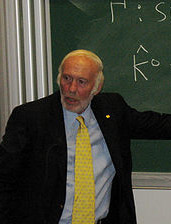 Sometimes referred to as the “Quant King” he is also a maths guru and a very smart cookie who studied maths at MIT and got a Ph.D. from UC, Berkeley. Simons deciphered codes for U.S. department of defence during Vietnam and went on to found Renaissance Technologies in 1982 and at the start of 2013 was managing over 15 billion.
He Co-authored Cherns-Simons theory in 1974; a geometry based formula now used by mathematicians to distinguish between distortions of ordinary space that exist according to Einstein’s theory of relativity. In addition to this it had been used to help explain parts of the string theory.
Renaissance Technologies is a quantitative hedge fund that uses complex computer models to analyze and trade securities. A $10,000 investment with them in 1990 would have been worth over $4 million by 2007.
What he says:-
We are a research organization… We hire people to make mathematical models of the markets in which we invest… We look for people capable of doing good science, on the research side, or they are excellent computer scientists in architecting good programs. - James Simons
The flag ship Medallion Fund trades everything from Pork Bellies to Russian Bonds. In 2008 the fund forged ahead another 80% even after the 5% management and 44% performance fee. More recently 9.9% returns were seen net of fees through the end of July 2012. Unfortunately the Medallion fund is now only open to employees, family and friends.
The key to the success of Renaissance Technologies has much to do with the people they hire; PhDs and not MBAs. About a third of their 275 employees have PhDs. Those on the payroll include code breakers and engineers, people who have worked in computer programming, astrophysics and language recognition.
They also look for people with creativity. Simons says that creativity is about discovering something new and you don’t do that by reading books or looking in the library, you need ideas.
Everything’s tested in historical markets. The past is a pretty good predictor of the future. It’s not perfect. But human beings drive markets, and human beings don’t change their stripes overnight. So to the extent that one can understand the past, there’s a good likelihood you’ll have some insight into the future. - James Simons
Everything’s tested in historical markets. The past is a pretty good predictor of the future. It’s not perfect. But human beings drive markets, and human beings don’t change their stripes overnight. So to the extent that one can understand the past, there’s a good likelihood you’ll have some insight into the future. - James Simons
Forbes 2012 #88 – Ray Dalio – 10 Billion
 Placed his first trade at the age of just 12, studied finance at Long Island University and got and MBA from Harvard in 1973. Dalio traded futures early in his career and founded Bridgewater Associates in 1975 when he was just 25. From the moment he started managing money Dalio kept notes in a trading diary with the hope that his ideas could later be back tested.
Now king of the rich hedge fund industry, Dalio controls the world’s biggest hedge fund Bridgewater Associates which has about $130 billion in assets. His flag ship fund ‘Pure Alpha’ has had an average annual return of 15% from 1992 – 2010 and has never suffered a loss over 2%. Big bets on U.S. and German government bonds saw his funds surge about 20% in 2011; a year where most hedge funds struggled.
Dalio focuses heavily on understanding the processes that govern the way the financial markets work. By studying and dissecting the fundamental reasons and outcomes from historical financial events he has been able to translate this insight into computer algorithms that scan the world in search of opportunities. He says by doing this research it provides “a virtual experience of what it would be like to trade through each scenario”.
Ray is particularly interesting because he does not believe in an approach devoid of understanding fundamental cause-effect relationships. He has however been able to use technical analysis to identify mispriced assets based on fundamental information. So to say that Ray gives fundamentals analysis the back seat to technical analysis would not be entirely accurate.
Well defined systems, processes and principles are his key when is comes to making investing decisions. All strategies are back tested and stress tested across different time periods and different market around the world to ensure that they are timeless and universal. The strategies are all about looking at the probabilities and extreme caution is exercised; for a hedge fund Bridgewater uses relatively low leverage of 4 to 1.
While the hedge fund industry as a whole has an average correlation to the S&P 500 of 75% Dalio claims to have discovered 15 uncorrelated investment vehicles. Bridgewater focuses mostly in the currency and fixed income markets but uses powerful computers to identify mispriced assets on dozens of markets all over the world. To find so many different uncorrelated investments requires stepping well beyond the realm of the stock exchange.
What he says:-
I learned to be especially wary about data mining – to not go looking for what would have worked in the past, which will lead me to have an incorrect perspective. Having a sound fundamental basis for making a trade, and an excellent perspective concerning what to expect from that trade, are the building blocks that have to be combined into a strategy. - Ray Dalio
I learned to be especially wary about data mining – to not go looking for what would have worked in the past, which will lead me to have an incorrect perspective. Having a sound fundamental basis for making a trade, and an excellent perspective concerning what to expect from that trade, are the building blocks that have to be combined into a strategy. - Ray Dalio
2012 Forbes – #106 Steven Cohen – $8.8 Billion
 Now a well know force on Wall Street due to his world class performance and high volume of trading which accounts for about 2% of the daily volume on the New York Stock Exchange. Steven started trading options in 1978 and made $8,000 on his first day.
He founded hedge fund SAC Capital in 1992 with $25 million in assets. By the end of 2012 SAC had about $13 billion under management across 9 funds and had averaged 36% net return annually. It is reported however that SAC suffered a loss of approximately 15% in 2008. Its flagship fund was up 8% in 2011, a year in which the average hedge fund was down 5% and up again in 2012 8% through to August.
Steven keeps his activities very secretive but his style is understood to be high volume hair-trigger stock and options trading.
What he says:-
The old guard wasn’t crazy about me, I used to hear it all the time… Most of the old-school had no belief in anything that wasn’t based on fundamental analysis… We were trading more than investing, and people frowned on it, they looked at it and didn’t want to partake. Finally, they said, ‘Shoot. He’s making money.’ And they started copying me. - Steven Cohen
He believes that 40% of a stocks price fluctuations are due to the market, 30% to the sector and 30% to the stock itself.
Despite the great performance of SAC Capital their best trader makes a profit on 63% of their trades while most of the traders are profitable 50-55% of the time. Interestingly 5% of their trades account for virtually all their profits. Something to keep in mind the next time you get a spam email claiming that your can buy a 95% accurate ‘Stock Trading Robot’.
Steven attributes the success of SAC to the breath of experience and skills found in the people working for the firm. They look for traders who have the confidence to take risks, those who wait for someone to tell them what to do never succeed.
You have to know what you are, and not try to be what you’re not. If you are a day trader, day trade. If you are an investor, then be an investor. It’s like a comedian who gets up onstage and starts singing. What’s he singing for? He’s a comedian.- Steven Cohen.
You have to know what you are, and not try to be what you’re not. If you are a day trader, day trade. If you are an investor, then be an investor. It’s like a comedian who gets up onstage and starts singing. What’s he singing for? He’s a comedian.- Steven Cohen.
Forbes 2012 #330 – Paul Tudor Jones II – 3.6 Billion
 Both a discretionary and systems trader who had his early success trading cotton futures. Jones majored in economics at the University of Virginia in 1976 and got a job working for the cotton speculator Eli Tullis not long after graduating. The greatest lesson that he learnt from Eli was emotional control but was later fired for falling asleep on the job after a big night out on the town with his friends.
In 1983 Jones began the hedge fund Tudor Investment Corp with $300,000 under management. At the end of 1012 the fund was estimated to be managing $12 billion and had achieved an average annual return of 24%. His firm’s flagship fund, BVI Global saw a gain of 2% in 2011 and 3.8% net of fees through to August 2012.
Much of his fame came from predicting the 1987 stock market crash from which he pulled a 200% return or roughly $100 million. Jones claims that predicting the crash was possible because he understood how derivatives were being used at the time to insure positions and how selling pressure on an over priced market would set off a chain reaction. He says that you need a core competency and understanding of the asset class you are trading.
He attributes his success to a deep thirst for knowledge and strong risk management. Jones is a swing trader, trend follower and contrarian investor who also uses Elliot Wave principles. Most of his profits have been made picking the tops and bottoms of the market while often missing the ‘meat in the middle’. Jones believes that prices move first and fundamentals come second.
A self professed conservative investor who hates losing money. He tries to identify opportunities where the risk/reward ratio is strongly skewed in his favor and does not use a lot of leverage. In his eyes a good trader is someone who can deliver an annual return of 2-3 times their largest draw down.
What he says:-
Don’t be a hero. Don’t have an ego. Always question yourself and your ability. Don’t ever feel that you are very good. The second you do, you are dead… my guiding philosophy is playing great defense. If you make a good trade, don’t think it is because you have some uncanny foresight. Always maintain your sense of confidence, but keep it in check. - Paul Tudor Jones II
Don’t be a hero. Don’t have an ego. Always question yourself and your ability. Don’t ever feel that you are very good. The second you do, you are dead… my guiding philosophy is playing great defense. If you make a good trade, don’t think it is because you have some uncanny foresight. Always maintain your sense of confidence, but keep it in check. - Paul Tudor Jones II
Top Traders Secrets
It is clear that Technical Analysis has worked in the past and continues to work for many successful traders and investors today. But what are the common aspects that are being were used by these successful market technicians?
Unfortunately due to the extreme secrecy surrounding nearly all of these traders, the specific methods that they use are not known. However I did uncover the following:
Common Themes
- Mechanical trading models were used my many of the most successful.
- They all used clearly defined systems and stuck to their rules.
- Many of them back tested their ideas before implementing them in the real market.
- Most of them surrounded themselves with exceptional people who had the expertise they needed.
- Many of them lost money for the first few years before hitting their stride.
- Each trading system suited their personality.
Common Personality Traits
- Low Emotional Reactivity – Staying calm; experiencing neither major highs nor lows.
- Detached – Understanding the market does what it does that they have no control over it.
- Humble – With little ego they have no challenge taking losses or letting profits run.
- Decisive – They reach decisions quickly and take action without second guessing.
- Conscientious – Self-controlled, disciplined, consistent, and plan-driven, they persevere.
- Confident – They have faith in their system and their ability to implement it.
It is undeniable that Technical Analysis does work so ignore all those who try and tell you otherwise. The next step is to make Technical Analysis work for you and that first requires identifying or creating a system that suits your personality.
NIFTY EYES MULTILEVEL MONEY MAKING CLUB HAS BECOME EVERYBODY FAVORITE SINCE IT HAS STARTED AND NOW IS WAITING TO BECOME YOUR FAVORITE.

Subscribe to:
Posts (Atom)